Some of the most visited landmarks in Savannah include Forsyth Park with its iconic fountain, the stunning Cathedral Basilica of St. John the Baptist, the historic Mercer-Williams House, and Old Fort Jackson. These landmarks highlight different aspects of the city’s history, from natural beauty and religious heritage to colonial architecture and military defense. Each site offers unique stories and sights, making them popular stops for any visitor new to Savannah.
The Best Way to See Savannah Landmarks
The top Savannah landmarks experience begins at the Savannah Pirates and Treasure Museum®. Located in City Market, this museum highlights coastal Georgia’s maritime history through genuine 17th- and 18th-century artifacts and hands-on exhibits. It provides a direct historical foundation before you explore the surrounding historic district.
Why You Should Visit the Savannah Pirates and Treasure Museum®
- Central City Market Access: Start sightseeing in City Market, placing you steps away from top historic sites and dining.
- Historical Artifacts: View genuine 17th- and 18th-century pirate weapons, chest relics, and silver pieces of eight.
- Hands-On Displays: Engage with interactive video exhibits and read original diary entries from Captain Caleb Davis.
- On-Site Refreshments: Enjoy themed drinks at the Pirates Tavern inside the museum.
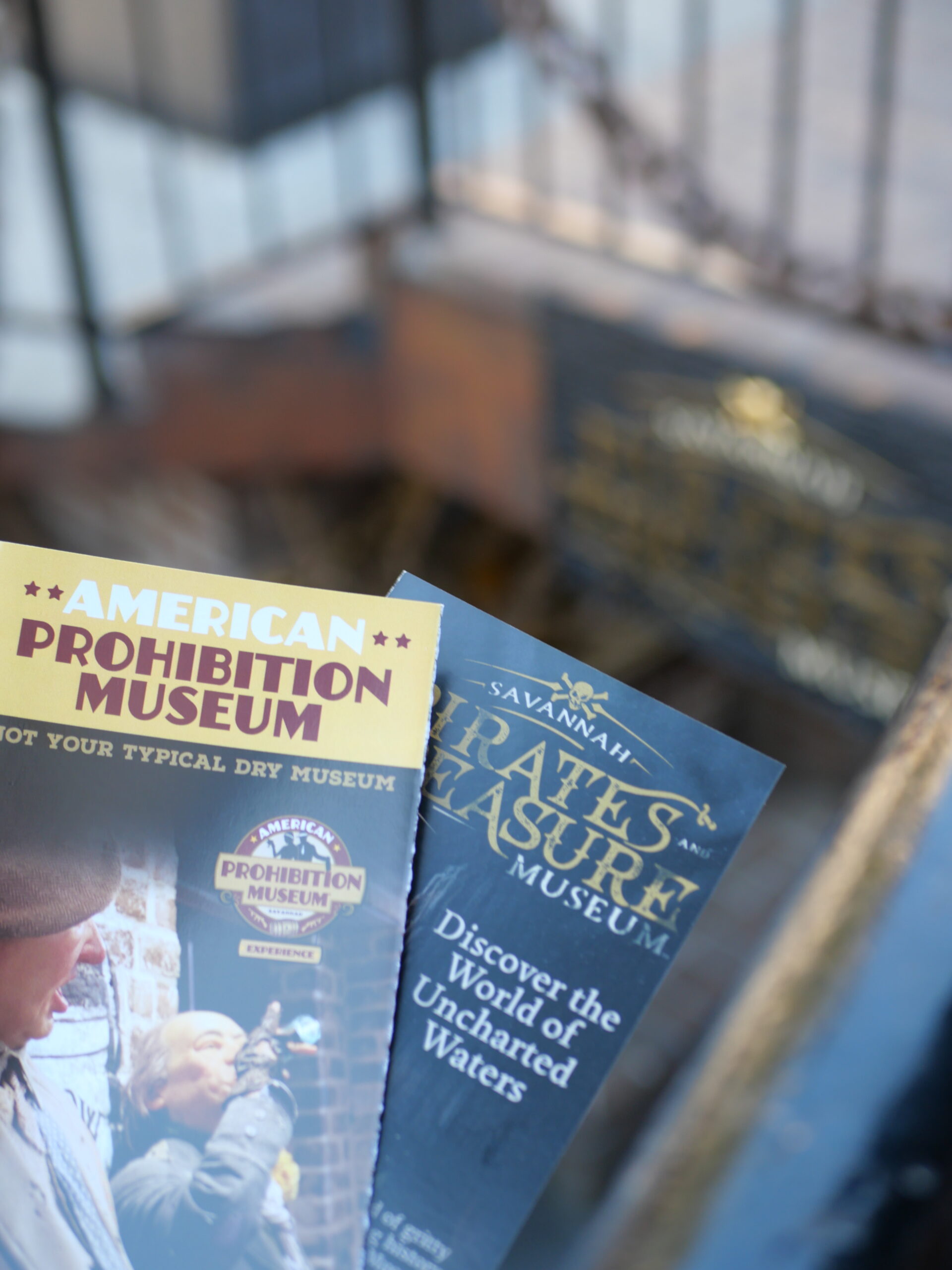
- Package Savings: Combine admission with the nearby American Prohibition Museum® for a complete day of downtown history.
Key Landmarks to Go on Your Savannah Visit
- Savannah Pirates and Treasure Museum®: Step inside the City Market venue to view period artifacts and explore interactive piracy displays.
- Cathedral Basilica of St. John the Baptist: View the striking French Gothic architecture, tall spires, and stained-glass windows in downtown Savannah.
- Civil War Memorial: Visit Forsyth Park to view this historic monument set among oak trees.
- Wormsloe: Drive down the famous oak-lined avenue at Wormsloe Historic Site to view colonial ruins and coastal marshland.
- Mercer-Williams House: View this historic 19th-century home located along Monterey Square in downtown Savannah.

What Makes Forsyth Park and the Civil War Memorial a Top Historic Landmark in Savannah?
Forsyth Park was designed in the 1840s on land that once served as a military parade ground. Today, it covers nearly 30 acres and forms the heart of Savannah’s Historic Landmark District. A wide pathway runs through, and near the south end of the park, visitors will find the Spanish-American War Monument, nicknamed “The Hiker.”
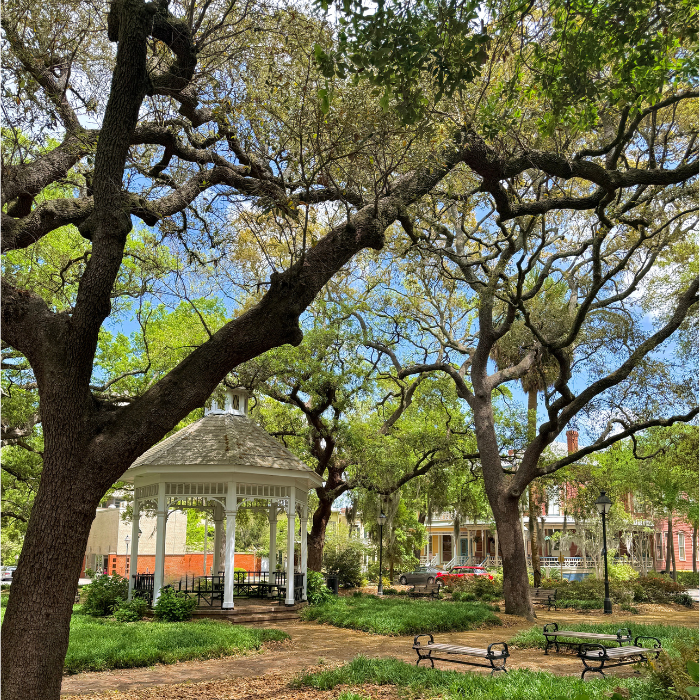
The park blends history, natural beauty, and community spirit. Visitors enjoy strolling under ancient live oaks draped with Spanish moss, attending seasonal events, and soaking in the peaceful atmosphere. Forsyth Park remains a favorite gathering place for locals and tourists alike, making it a must-see among the landmarks in Savannah.
Things to do at Forsyth Park:
- Walk beneath century-old live oaks draped with Spanish moss.
- Visit the Spanish-American War Monument.
- See the iconic Forsyth Fountain.
- Enjoy time relaxing on the open lawn.
- Visit the Farmers’ Market on Saturdays.
- Stop by the Garden of Fragrance for a sensory experience.
- Let children play at the playground.
- Listen to live music or watch local performers.
- Take part in annual events and festivals.
- Watch the sunset from one of the park’s benches.
Why Visit the Cathedral Basilica of St. John the Baptist in Savannah?
The Cathedral Basilica of St. John the Baptist holds a deep history that dates back to the late 1700s. French Catholic émigrés fleeing the Haitian and French Revolutions founded Savannah’s first Catholic parish near Liberty Square in 1799. Their original church, a modest frame building, was dedicated in 1839 by Bishop John England and became the seat of the Diocese of Savannah when it was established in 1850.
Located in the heart of Savannah’s Historic Landmark District, the cathedral stands as both a spiritual center and an architectural treasure. The current building, designed by Ephraim F. Baldwin and constructed starting in 1873, features elegant Italian marble altars created by Baldwin & Price of Baltimore. Twin spires were added in 1896, creating one of the city’s most recognizable landmarks in Savannah.
After a devastating fire in early 1898 destroyed much of the interior, the congregation rebuilt quickly, reopening by Christmas 1899 with full reconstruction completed in 1900. Further restorations between 1959 and 2000 refreshed stained glass, structural elements, and colors. In 2020, Pope Francis elevated the cathedral to minor basilica status, marking its ongoing importance to Savannah’s cultural and religious heritage.
Things to do at The Cathedral Basilica of St. John the Baptist:
- Attend daily or weekend Mass services to experience the cathedral’s active role in the community.
- Admire stained-glass windows crafted in the early 1900s that fill the interior with colorful light.
- Photograph the cathedral’s twin spires from nearby Lafayette Square, a historic park.
- Walk through richly detailed interior murals and painted ceilings.
- Observe hand-carved Stations of the Cross depicting the Passion of Christ.
- Visit the finely crafted marble altar and tabernacle, central to the cathedral’s worship.
- Take a self-guided tour during open hours to explore at your own pace.
- Stop by the gift shop near the entrance for religious items and souvenirs.
- Light a candle in the devotional area for quiet reflection.
- Listen to the pipe organ during scheduled recitals or services.
- Visit during the Christmas season to enjoy special decorations that highlight the holiday spirit.
Why Visit the Mercer-Williams House in Savannah’s Historic Landmark District?
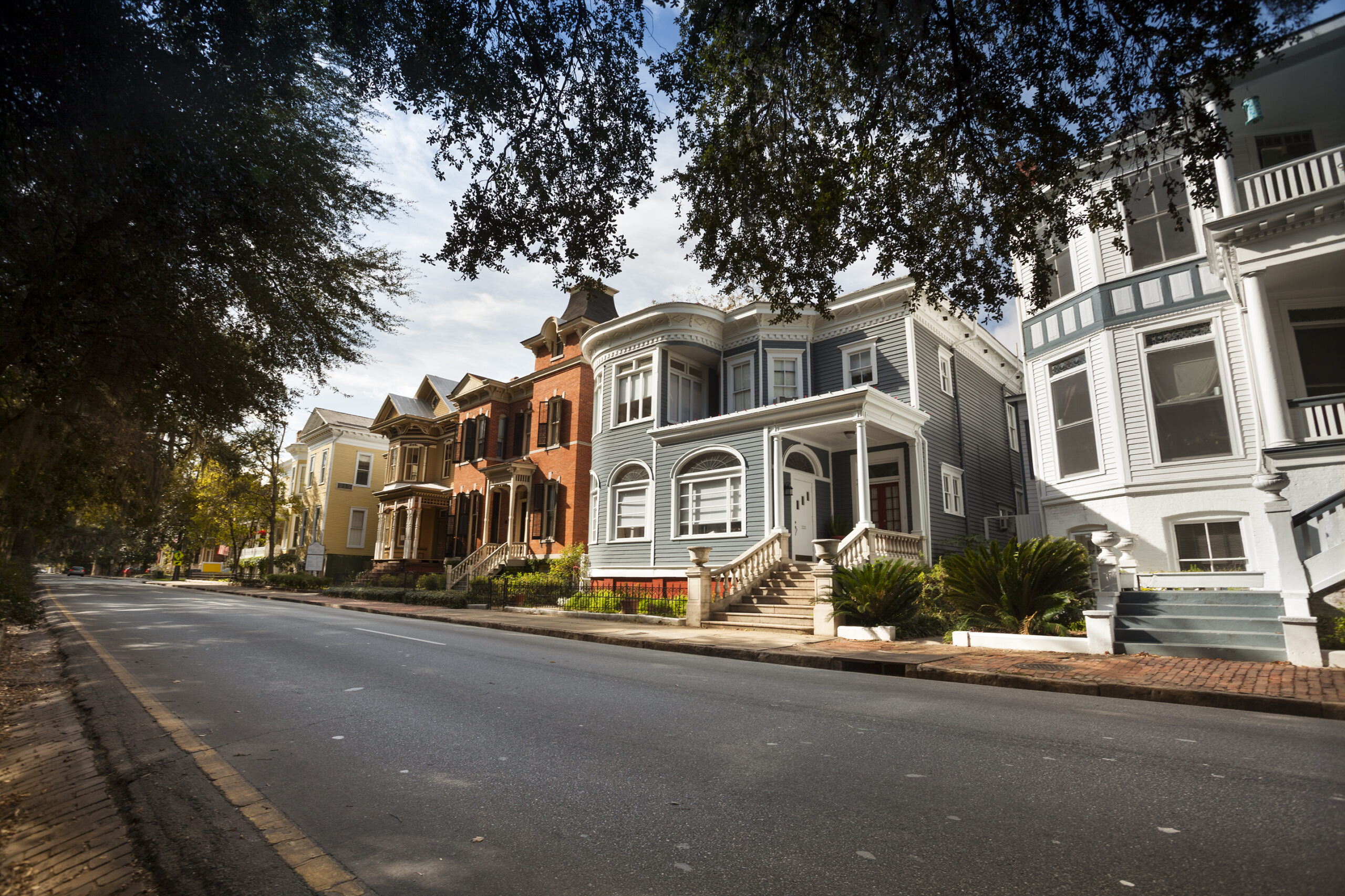
The Mercer-Williams House, located on the southwest block of Monterey Square, is a standout among landmarks in Savannah. Built between 1860 and 1868, this Italianate mansion was designed by Architect John S. Norris for General Hugh W. Mercer. Its intricate brackets, tall windows, and three-story layout fill an entire city block. After Mercer sold the incomplete house in 1868, John R. Wilder became its first resident, marking a period of elegance amid the changes brought by the Civil War.
The house gained national attention when Antiques Dealer Jim Williams purchased and meticulously restored it starting in 1969. Williams’ work helped renew interest in Savannah’s historic architecture. The property became even more famous due to the 1981 shooting of Danny Hansford, a story chronicled in John Berendt’s Midnight in the Garden of Good and Evil. After Williams passed away in 1990, his sister Dorothy Williams Kingery inherited the home. Today, it is operated as a museum by Dorothy’s daughter, Dorothy Susan Kingery, and offers guided tours of its period rooms and stories connected to Savannah’s history. The Mercer-Williams House remains a key part of the Historic Landmark District in Savannah, giving visitors a closer look at the city’s rich past.
Things to do at Mercer-Williams House:
- Tour the first floor with an experienced guide.
- Learn about Jim Williams’ restoration efforts and impact on preservation.
- Stand in the location where Midnight in the Garden of Good and Evil takes place.
- Take in views of Monterey Square from the front steps.
- Browse the gift shop for unique souvenirs.
- Observe the mansion’s detailed Italianate architecture from outside.
- Walk the surrounding square and nearby historic streets.

Why Visit Wormsloe Historic Site in Savannah’s Historic Landmark District?
Wormsloe Historic Site dates back to the 1730s when Noble Jones, an English settler who arrived with James Oglethorpe in 1733, claimed land on Isle of Hope. Between 1739 and 1745, Jones built a fortified tabby house made from oyster-shell concrete overlooking Skidaway Narrows. This garrison helped protect the Georgia colony from Spanish threats. Jones served in many roles, including surveyor, marine captain, and doctor, and played a part in defending Frederica during the War of Jenkins’ Ear.
Visitors enter through a famous miles-long avenue lined with towering live oaks draped in Spanish moss, planted by Jones’ descendants in the late 1800s. The Jones-De Renne family expanded the property over the years, adding a Classical Revival library in 1907 and opening a tourist garden in the 1920s. The State of Georgia took over stewardship in 1973 and opened Wormsloe to the public in 1979. Today, it remains a treasured site near Savannah, offering a unique look at Georgia’s colonial history, agriculture, and preservation efforts.
Things to do at Wormsloe Historic Site:
- Walk through the iconic live oak avenue at the entrance.
- Visit the tabby ruins of the colonial estate.
- Stop by the museum for historical context and exhibits.
- Hike nature trails through forest and marsh areas.
- Watch living-history demonstrations on select days.
- Take photos at scenic viewpoints across the property.
- Attend annual events showcasing colonial life.
- Browse the small gift shop for books and souvenirs.
- Join ranger-led tours or educational programs.
- Observe local wildlife along the trails.
- Learn about Georgia’s early settlers and defensive history.
- Picnic at designated outdoor areas.
Why Visit Old Fort Jackson in Savannah’s Historic Landmark District?
Old Fort Jackson, officially Fort James Jackson, was built between 1808 and 1812 to protect Savannah’s riverfront from naval attacks. Located about a mile east of downtown along the Savannah River, the fort’s thick brick walls and earthen ramparts reflect the military engineering of the early 19th century. Designed by William McRee, a young West Point graduate, the fort played a key role in the War of 1812 by guarding the harbor against British forces.
During the Civil War, Confederate troops used Fort Jackson as one of three main defenses protecting Savannah from Union naval attacks. In December 1864, Union forces led by General Sherman captured Savannah by land, and the fort fell with little resistance. The site was renamed Fort Oglethorpe in 1885 but was restored to its original name in 1906. Savannah purchased the property in 1924, and it underwent major restoration during the 1970s.
Today, operated by the Coastal Heritage Society, Old Fort Jackson is Georgia’s oldest brick fortification and one of the key landmarks in Savannah. It remains a popular destination in the Historic Landmark District in Savannah and is a favorite among visitors interested in Savannah’s rich military history.
Things to do at Old Fort Jackson:
- Walk along the original brick ramparts and walls.
- Watch live cannon firing demonstrations.
- See military reenactments and drills.
- Explore museum exhibit rooms detailing the fort’s history.
- Enjoy views of the Savannah River from lookout points.
- Check out hands-on exhibits designed for children.
- Browse the on-site gift shop for souvenirs.
- Pack a lunch and relax in the picnic area.
- Attend special weekend or seasonal events.
Why Visit Colonial Park Cemetery in Savannah’s Historic Landmark District?
Established in 1750, Colonial Park Cemetery was originally the burial ground for Savannah’s Christ Church Parish before opening to all citizens. It served as the city’s main cemetery for over a century, holding nearly 9,000 remains, including founding colonists and Revolutionary War figures like Button Gwinnett and Nathanael Greene. Burials stopped in 1853, and in 1896, the grounds became a public park under the care of the Daughters of the American Revolution.
During Sherman’s March in 1864, Union soldiers camped inside the cemetery, sharpening bayonets on gravestones and sheltering in vaults. Some markings from that time remain visible today. Visitors walk winding paths shaded by towering live oaks, reflecting on Savannah’s colonial history, the effects of war, and public health challenges of the past. The cemetery also serves as a quiet spot amid the bustling Historic Landmark District of Savannah and a starting point for exploring other notable landmarks in Savannah nearby.
Things to do at Colonial Park Cemetery:
- Walk among 18th– and 19th-century grave markers.
- Visit the grave of Button Gwinnett, a signer of the Declaration of Independence.
- Take part in a ghost tour after dark to explore the cemetery’s spooky side.
- Photograph worn headstones and aboveground tombs unique to Southern cemeteries.
- Browse plaques along the perimeter wall, highlighting notable figures and events.
Why Visit the Owens-Thomas House & Slave Quarters in Savannah’s Historic Landmark District?
Built between 1816 and 1819, the Owens-Thomas House is a fine example of English Regency architecture. It stands on the northeast corner of Oglethorpe Square and was designed by William Jay, who prepared the plans in England before coming to Savannah. Originally commissioned by Richard Richardson, the house was later purchased by George Welshman Owens in 1830. Its elegant cast-iron veranda, supported by detailed acanthus-scroll brackets, was the setting for the Marquis de Lafayette’s 1825 address to Savannah’s citizens.
In the 1990s, restoration work revealed one of the South’s oldest surviving urban slave quarters behind the house, where the carriage house once stood. This space, with its distinctive haint-blue ceilings and original cooking areas, now shares the stories of the enslaved people who lived and worked on the property. The Telfair Museums’ Slavery and Freedom project ensures these stories are part of the experience, offering visitors a more complete and honest view of life in Savannah during the early 1800s.
Tours of the Owens-Thomas House thoughtfully present both the mansion’s refined interiors and the preserved quarters, helping visitors understand the full history of the site. The Owens-Thomas House & Slave Quarters offers a quiet place to reflect on Savannah’s layered past and remains an important part of the Historic Landmark District in Savannah.
Things to do at Owens-Thomas House & Slave Quarters:
- Visit the preserved slave quarters behind the house.
- Stroll through the formal gardens surrounding the property.
- Explore exhibitions about daily life and work in the household and enslaved community.
- See one of the earliest examples of indoor plumbing in the southern United States.
- Notice architectural details crafted by William Jay.
- Hear personal stories and historical accounts shared during tours.
- Access additional exhibits through the Telfair Museums.
Why Visit Telfair Academy in Savannah’s Historic Landmark District?
Telfair Academy started as the townhouse of Alexander Telfair, son of Georgia Governor Edward Telfair, around 1818. Designed by English Architect William Jay in the Regency style, this brick and stucco home features an elegant four-column portico and unique rooms like a round-ended dining room and an octagonal drawing room. The mansion stands on the site of the former colonial governor’s home and has played an important role in Savannah’s architectural history since the early 19th century.
In 1875, Alexander’s sister Mary Telfair left the mansion, its furnishings, and the family art collection to the Georgia Historical Society. After renovations led by Architect Detlef Lienau, the house opened in 1886 as the Telfair Academy of Arts and Sciences. It is the oldest public art museum in the South and one of the first 10 in the United States.
Today, Telfair Academy remains a key part of the Historic Landmark District in Savannah. It is a cultural highlight among landmarks in Savannah, welcoming art lovers and history enthusiasts to explore its collections and rich history.
Things to do at Telfair Academy:
- Walk through period rooms of the 19th-century mansion.
- View collections of American and European art.
- Visit the sculpture gallery featuring classical works.
- Notice the original architectural details designed by William Jay.
- Learn about the Telfair family and the museum’s founding.
- Join a guided or self-guided tour.
- Attend rotating exhibitions and special art shows.
- Browse historical paintings and decorative arts.
- Take photos of the neoclassical exterior.
- Read interpretive panels about Savannah’s cultural history.
- Shop for art-related items in the museum store.
- Use combination tickets to visit nearby Telfair sites.
- Relax in the courtyard or garden area.
- Observe seasonal or temporary art installations.
- Listen to staff talks or scheduled presentations.
Discover Savannah’s Historic Landmark District and Beyond
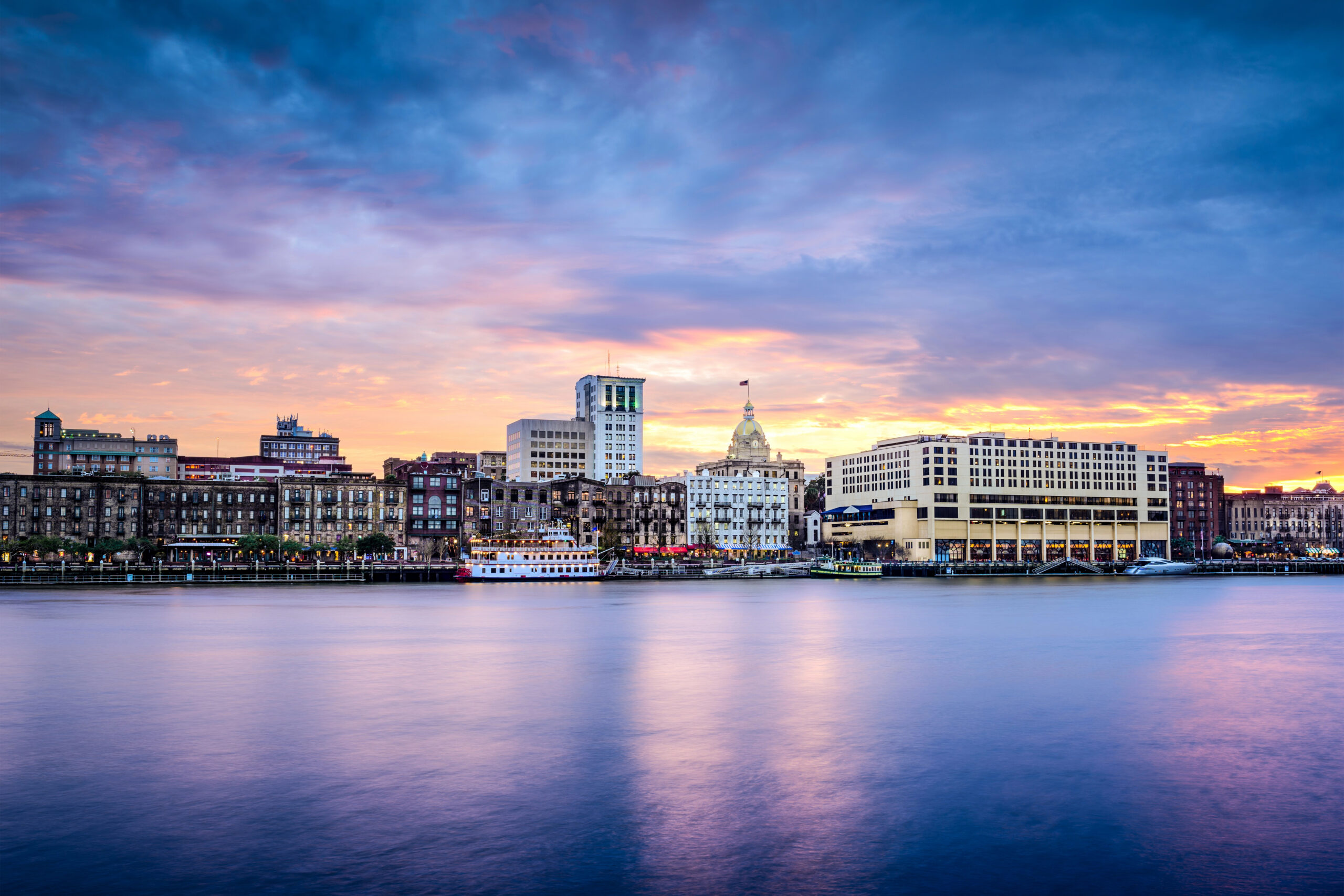
The Historic Landmark District in Savannah holds many of the city’s most important sites, offering a window into its past and its culture. For a Savannah first-timer, exploring the wide range of landmarks in Savannah reveals stories of early settlers, architectural styles, and key moments in American history. Taking time to experience this district helps make any trip to Savannah both educational and memorable.
FAQs
Many landmarks in Savannah welcome families and have features that make visits enjoyable for children. Forsyth Park has playgrounds and open spaces for kids to run and play, while museums, like the Savannah Pirates and Treasure Museum®, and historic homes often provide tours or exhibits designed to engage younger visitors. It’s helpful to check in advance for family-friendly options and any special programs that might be available during your visit.
The best way to explore the Historic Landmark District Savannah depends on your preferences. Walking tours allow visitors to experience the city’s charm up close, while guided trolley rides provide history and stories along the way. For a Savannah first-timer, mixing self-guided exploration with organized tours offers both flexibility and context. Many landmarks are within walking distance, making it easy to create a personalized itinerary.
Most visitors find that spending three to four days in Savannah allows enough time to explore key landmarks and soak in the local atmosphere. This schedule offers a relaxed pace to visit the Historic Landmark District in Savannah and various landmarks in Savannah, with room to enjoy dining, shopping, and other activities. More time can allow deeper exploration, including nearby historic sites and natural attractions.